Creating Calm: How Smaller Assisted Living Settings Assist Elders with Amnesia
Business Name: BeeHive Homes of Crownridge Assisted Living & Memory Care
Address: 6919 Camp Bullis Rd, San Antonio, TX 78256
Phone: (210) 874-5996
BeeHive Homes of Crownridge Assisted Living & Memory Care
We are a small, 16 bed, assisted living home. We are committed to helping our residents thrive in a caring, happy environment.
6919 Camp Bullis Rd, San Antonio, TX 78256
Business Hours
Families typically connect to me at a breaking point. A parent has actually roamed in the evening, medication has actually been missed out on again, or a partner is tired from caregiving. The concern is nearly always the same: "Where will they feel safe and still like themselves?"
For elders living with amnesia, the size and feel of an assisted living neighborhood can figure out whether every day is confusing and frustrating, or settled and fairly tranquil. Larger is not always better. In a lot of cases, smaller settings develop the calm and predictability that an individual with cognitive decrease needs in order to function and feel secure.
This is not a one size fits all problem. I have actually seen big neighborhoods work perfectly for some locals and poorly for others. Still, for many people navigating dementia care or early memory changes, a smaller sized, more intimate environment provides clear advantages.
Why environment feels so various with memory loss
Memory loss does not just suggest forgetting names or losing secrets. With progressive dementias like Alzheimer's illness, vascular dementia, Lewy body dementia, and blended types, numerous abilities are affected at once:
People frequently lose the ability to track time, follow intricate conversations, translate visual information quickly, and handle diversions. A dining room dynamic with thirty or forty individuals can seem like a train station. A corridor with unknown doors can seem like a labyrinth. Numerous options at every turn can seem like a test they are predestined to fail.
What utilized to be energizing can end up being memory care facilities near me stressful or frightening.
In senior care, environment is not just decoration. It is a scientific tool. The structure design, lighting, noise level, personnel regimens, and number of homeowners all influence behavior, sleep, cravings, and state of mind. For people with amnesia, particularly those getting memory care or dementia care supports, the threshold for overload is much lower.
What "smaller sized" truly means in assisted living and memory care
Families typically request a particular number: "What is thought about a small assisted living?" The reality is, numbers just tell part of the story.
I have actually seen forty individual neighborhoods feel intimate due to the fact that they are divided into 4 unique households of 10 locals, each with its own small living-room and dining location. I have likewise strolled into twenty resident structures that felt institutional and confidential, with long passages and central dining far from the rooms.
When I talk about smaller settings that tend to support calm for individuals with memory loss, I am usually referring to environments with one or more of these qualities:
- A restricted number of citizens sharing each living area, typically in the range of 8 to 16
- Short, easy corridors that loop or lead plainly back to typical areas
- A constant team of caretakers who understand each resident's history, preferences, and patterns
- Common spaces sized to feel like a home, not a hotel lobby
- Clear visual hints to assist with orientation, such as color coded doors, memory boxes, and uncluttered sightlines
Some of these settings are official memory care units within a bigger assisted living neighborhood. Others are standalone residential care homes, sometimes called board and care homes, adult household homes, or group homes, depending on the state.
The licensing labels differ, however the lived experience typically boils down to the exact same question: does this seem like a little, knowable world or a complex, continuously changing one?
Sensory load and the power of less inputs
One of the most immediate distinctions in smaller sized assisted living or memory care settings is the sensory environment.
In a big neighborhood, even a well run one, there is usually a constant background of activity. More homeowners imply more visitors, deliveries, treatment sessions, alarms, music programs, and staff moving in and out. Individually, none of those things are troublesome. For a brain currently working hard to interpret and filter info, that constant stream can be exhausting.
In smaller sized settings, there are just less inputs. Fewer individuals talking at the same time. Less foot traffic past the doorway. Shorter ranges to navigate. The dining-room might host 10 residents instead of fifty, which allows quieter conversation and simpler focus on the meal.
I remember a retired teacher, early phase Alzheimer's, who had lived her entire life in vibrant environments. Her child anxious she would be tired in a small memory care home that housed only fourteen locals. Within a week, the daughter called me. "She is in fact more talkative," she said. "She is not shutting down at dinner any longer." The content of the conversations had not changed much, however the rate had. Her mother could lastly keep up.
For many elders with memory loss, that reduction in sensory mess suggests less agitation and less behavioral signs. We see a decrease in "exit looking for" roaming, less upset outbursts, and less regular use of as needed stress and anxiety medications. Not since the health problem has actually changed, however due to the fact that the environment is no longer provoking their nervous system all day.
Familiarity, routine, and the worth of predictability
Another hallmark of smaller assisted living and dementia care environments is more foreseeable regimens. There are fewer personnel rotations, less dining rooms and activity spaces, and less schedule changes. For a brain that struggles to encode new information, predictability is a lifeline.
In a small home like setting, early morning may constantly follow a similar pattern: the same caregiver knocks, aids with dressing and bathing, then strolls with the resident to a nearby kitchen area where breakfast is cooked. They being in the exact same seat, near the exact same individuals, with familiar sounds and smells. In time, the regular becomes a kind of muscle memory.
In bigger senior care communities, even well operated ones, slight disruptions are more typical. An employee aborts, so somebody unfamiliar covers the hallway. A big bus getaway pulls many citizens and staff away. The dining room requires to accommodate a huge family luncheon, so some tables are rearranged. None of this is incorrect, however for a resident already confused about time and location, it can intensify uncertainty.
Predictable does not indicate rigid. The best small settings I have seen mix dependable rhythms with versatile, individual focused choices. For example, a resident who has constantly been a late riser is not dragged out of bed to "fit" the schedule. Rather, the schedule bends within a recognized structure. Breakfast might be readily available over a large window, but still served in the same cozy dining area with the very same team.
When regular lives in the environment rather than in a printed calendar, seniors with memory loss do not need to remember the schedule. Their surroundings assist them.
Relationships: why smaller sized groups typically indicate much deeper knowing
Ask any skilled nurse or administrator what makes or breaks dementia care, and eventually they will discuss personnel connection. The more a caretaker knows a resident, the much better they can anticipate requirements, translate behaviors, and de escalate problems.
Smaller assisted living and memory care settings tend to have:
Fewer homeowners per caregiver during the busiest times of day. This does not constantly show up neatly in staffing ratios, however you can feel it when you walk in. Staff are not power strolling from one end of the structure to the other. They are flowing within a small, specified space.
Stable staff tasks. When the building is smaller sized, it is more feasible to designate the very same caregiver to the exact same group of residents throughout lots of shifts. Over weeks and months, they discover who needs a gentle joke to accept a shower, who dislikes having their hair brushed in the morning, or who will just take medications with yogurt.
Stronger familiarity with families. In a cottage style memory care home, families usually understand the names and faces of the entire staff. They are seen, not lost in the crowd. This makes communication about subtle changes in habits or health much easier.
Deeper relationships are not simply emotionally satisfying. They are medically protective. A caretaker who knows that Mr. H always paces for 10 minutes before supper is less likely to interpret that pacing as agitation needing medication. Rather, they stroll with him, chat, or provide a small task. That type of informed reaction is even more most likely in environments where staff are consistently looking after the exact same little group.
Safety and autonomy: stabilizing flexibility in smaller sized spaces
Families frequently presume that a little setting is automatically safer. The truth is more nuanced.
Smaller structures, particularly those developed for dementia care, can be simpler to make safe. There are less outside doors to keep track of and less range between spaces and typical areas. Personnel can visually scan the whole environment more easily, which supports supervision.
At the same time, the scale of the area allows for a sort of "freedom within limits." Residents can move about without encountering complex crossways, multiple wings, or long elevator trips. For someone who tends to roam, looping corridors that bring them naturally back to a central living-room are typically much less stressful than a locked door at the end of a long corridor.
Physical security is just one piece of autonomy. Psychological safety matters too. Citizens are typically more going to take small independent actions in a familiar, less overwhelming area: putting their own coffee, folding laundry at the kitchen table, watering plants on the patio. These regular actions enhance a sense of self and skills that disease tries to erode.
Of course, smaller sized does not automatically mean much better security. A tiny residential care home that is badly staffed, improperly maintained, or not equipped for greater care needs can put residents at danger. You want "small but strong", not simply "small".
The function of respite care in evaluating the fit
For families not sure about transitioning a loved one into full-time assisted living or memory care, short stays can be invaluable. Respite care, which usually uses a provided space and full look after periods ranging from a few days to a couple of weeks, provides everybody a trial run.
In smaller settings, respite stays frequently offer a clear view of how the environment might support or challenge a person with memory loss. I usually encourage families to take note of three things during and after a respite:
First, sleep patterns. Does your relative sleep more soundly, with fewer night time calls or wandering episodes, in the calmer environment? Little settings with foreseeable evenings and lowered noise can frequently smooth out sleep wake cycles.
Second, mood and behavior. After a preliminary change period, exists less stress and anxiety, anger, or tearfulness? Do they seem more at ease with personnel and other residents? Often the emotional temperature in your home is greater than anyone realizes until it changes.
Third, function. Are they eating more consistently, taking part in conversation, or walking more safely? A smaller, scaffolded environment can silently support these functions without making the individual feel "managed."
Respite care is likewise an opportunity for families to experience their own relief. It is common for spouses or adult children to sleep through the night for the very first time in months. That alone can alter how they think about long term senior care options.
When larger assisted living might fit better
It would be comforting if the answer were always "smaller sized is better." People are more different than that.
There are situations where a larger assisted living or memory care community genuinely serves an individual better. For example:
An extremely social resident in very early stage amnesia might flourish on a larger menu of activities, trips, and peer groups. A small home may not offer enough different stimulation to keep them engaged.
Residents with complex medical requirements that border on competent nursing might be much safer in larger communities with on site nurses 24/7, more regular physician rounding, and direct connections to rehabilitation or hospital systems.
Families who live in rural areas might have gain access to only to one or two larger facilities close by. For them, the familiarity of regular visits can exceed the drawbacks of a bigger building.
There are also larger neighborhoods that purposefully produce "little worlds within a huge one" through devoted memory care wings, consistent staffing, and thoughtful style. I have seen residents do effectively there, particularly when the memory care system itself is designed with smaller group living in mind.
The key is to evaluate not only the size, however how that size is lived day to day.
What to look for when exploring smaller sized memory care or assisted living
Families often stroll into a building and focus first on surfaces: the paint color, the furniture, the yard. Those details do matter, but the deeper concerns are about rhythms, relationships, and responsiveness.
When you tour a smaller assisted living, residential care home, or memory care home, it can help to carry a compact set of concerns. Here is one method to structure that conversation.
- How many locals share this home, and how is the day organized for them?
- What is the typical caretaker to resident ratio during early mornings and evenings?
- Do the same employee take care of the very same homeowners most days?
- How do you deal with habits like roaming, refusal of care, or agitation?
- Can you share an example of how you changed routines for one specific resident?
Listen not only to the material of the responses, however to the ease and specificity. Vague actions like "We deal with that all the time" without concrete examples are red flags. You want to hear real stories, not simply assuring phrases.
Pay attention to your own body while you tour. Do you feel yourself relaxing as you move through the area, or discreetly bracing? Do citizens look engaged or parked? Are staff speaking about residents with respect, and directly to them, even if the person does not completely respond?
Smaller does not immediately imply warm. You are searching for a combination of scale and culture that matches your family member's requirements and temperament.
Family involvement in smaller settings
One underappreciated advantage of numerous little assisted living and dementia care homes is the ease of household involvement.
In big communities, family members sometimes seem like visitors in a hotel. There is a reception desk, a check in procedure, multiple hallways to browse, and a sense of being one of numerous. Staff may be kind however hurried. Information can get siloed between departments.
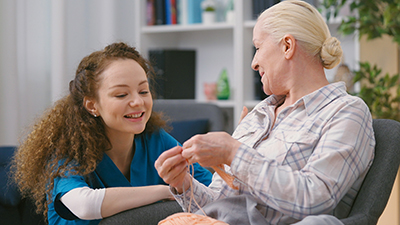
In a smaller home like environment, households frequently slip more naturally into the daily material. You might be invited to sit at the kitchen table during coffee time, aid with a craft, or walk a group of citizens in the garden. This type of informal involvement can maintain a sense of partnership and alleviate the regret lots of families carry about "putting" an enjoyed one.
At the very same time, smaller sized settings rely greatly on clear interaction. With a tight knit personnel and compact building, changes can ripple quickly. Households who flourish in these environments usually:
Communicate truthfully about what is happening in your home, including falls, habits modifications, and medications.
Accept guidance from staff who see the resident in a different context.
Respect boundaries around security, infection control, and care protocols, while still promoting when something feels off.
When the relationship works, it can be transformative. I have viewed families move from a crisis driven, sleep deprived existence at home to a sustainable rhythm where visits are about connection, not logistics.
Cost, policy, and the useful bottom line
No discussion about senior care is complete without acknowledging expense and regulation. Little settings and bigger communities both operate within state licensing frameworks that dictate what they can and can not do.
In lots of areas, residential care homes and small memory care environments are licensed similarly to assisted living, with guidelines about staffing, medication administration, fire safety, and more. They might not, nevertheless, be required to utilize nurses on website at all times. This can impact their ability to handle certain medical conditions, from feeding tubes to complicated injury care.
Financially, smaller does not always mean cheaper. In some markets, intimate memory care homes with high personnel ratios are priced at a premium compared to larger communities. In others, they are more modest since they are located in residential areas instead of big business campuses.
Families should ask straight about:
What is consisted of in the base rate versus charged as an add on (bathing help, medication management, incontinence care, transport).
How rates increase gradually, especially as care needs intensify.
Whether respite care stays are readily available and how those are billed.
Any distinctions in funding eligibility for small homes versus bigger facilities, such as Medicaid waivers or long term care insurance coverage coverage.
The objective is not simply to find a calm environment for today, however a sustainable plan for the months and years ahead.
Finding calm that fits the person, not just the diagnosis
Dementia care and memory care are frequently explained in scientific terms: phases, ratings, habits. Yet the day to day experience is exceptionally personal. A veteran used to structure and hierarchy may react in a different way to an environment than an artist used to liberty and privacy. A long-lasting city dweller may yearn for more bustle than somebody who invested years in a rural town.
Smaller assisted living and memory care settings provide a powerful tool for creating calm, but they are not magic. They work best when their intimacy is matched with thoughtful programming, proficient personnel, and a genuine regard for each resident's history.
When I stroll through a small home created for elders with memory loss and it is working well, I see specific things: the hum of discussion instead of television blaring, the smell of soup or cookies, the soft clatter of dishes in a real kitchen area. A caretaker kneels to be at eye level with a resident. Somebody laughs in the hallway. Nobody is rushing.
For households facing the hard choice to look for assisted living, respite care, or long term dementia care, that sort of environment can feel like a compromise between independence and safety that still honors the individual they like. Not a perfect response, but a gentler next chapter.
The choice of setting is not about square footage alone. It has to do with developing a world that is little enough to be knowable, stable enough to be soothing, and human enough to preserve self-respect, even as memory fades.
BeeHive Homes of Crownridge Assisted Living has license number of 307787
BeeHive Homes of Crownridge Assisted Living is located at 6919 Camp Bullis Road, San Antonio, TX 78256
BeeHive Homes of Crownridge Assisted Living has capacity of 16 residents
BeeHive Homes of Crownridge Assisted Living offers private rooms
BeeHive Homes of Crownridge Assisted Living includes private bathrooms with ADA-compliant showers
BeeHive Homes of Crownridge Assisted Living provides 24/7 caregiver support
BeeHive Homes of Crownridge Assisted Living provides medication management
BeeHive Homes of Crownridge Assisted Living serves home-cooked meals daily
BeeHive Homes of Crownridge Assisted Living offers housekeeping services
BeeHive Homes of Crownridge Assisted Living offers laundry services
BeeHive Homes of Crownridge Assisted Living provides life-enrichment activities
BeeHive Homes of Crownridge Assisted Living is described as a homelike residential environment
BeeHive Homes of Crownridge Assisted Living supports seniors seeking independence
BeeHive Homes of Crownridge Assisted Living accommodates residents with early memory-loss needs
BeeHive Homes of Crownridge Assisted Living does not use a locked-facility memory-care model
BeeHive Homes of Crownridge Assisted Living partners with Senior Care Associates for veteran benefit assistance
BeeHive Homes of Crownridge Assisted Living provides a calming and consistent environment
BeeHive Homes of Crownridge Assisted Living serves the communities of Crownridge, Leon Springs, Fair Oaks Ranch, Dominion, Boerne, Helotes, Shavano Park, and Stone Oak
BeeHive Homes of Crownridge Assisted Living is described by families as feeling like home
BeeHive Homes of Crownridge Assisted Living offers all-inclusive pricing with no hidden fees
BeeHive Homes of Crownridge Assisted Living has a phone number of (210) 874-5996
BeeHive Homes of Crownridge Assisted Living has an address of 6919 Camp Bullis Rd, San Antonio, TX 78256
BeeHive Homes of Crownridge Assisted Living has a website https://beehivehomes.com/locations/san-antonio/
BeeHive Homes of Crownridge Assisted Living has Google Maps listing https://maps.app.goo.gl/YBAZ5KBQHmGznG5E6
BeeHive Homes of Crownridge Assisted Living has Facebook page https://www.facebook.com/sweethoneybees
BeeHive Homes of Crownridge Assisted Living has Instagram https://www.instagram.com/sweethoneybees19
BeeHive Homes of Crownridge Assisted Living won Top Assisted Living Homes 2025
BeeHive Homes of Crownridge Assisted Living earned Best Customer Service Award 2024
BeeHive Homes of Crownridge Assisted Living placed 1st for Senior Living Communities 2025
People Also Ask about BeeHive Homes of Crownridge Assisted Living
What is BeeHive Homes of Crownridge Assisted Living monthly room rate?
Our monthly rate depends on the level of care your loved one needs. We begin by meeting with each prospective resident and their family to ensure we’re a good fit. If we believe we can meet their needs, our nurse completes a full head-to-toe assessment and develops a personalized care plan. The current monthly rate for room, meals, and basic care is $5,900. For those needing a higher level of care, including memory support, the monthly rate is $6,500. There are no hidden costs or surprise fees. What you see is what you pay.
Can residents stay in BeeHive Homes of Crownridge Assisted Living until the end of their life?
Usually yes. There are exceptions such as when there are safety issues with the resident or they need 24 hour skilled nursing services.
Does BeeHive Homes of Crownridge Assisted Living have a nurse on staff?
Yes. Our nurse is on-site as often as is needed and is available 24/7.
BeeHive Homes of Crownridge Assisted Living & Memory Care has license number of 307787
BeeHive Homes of Crownridge Assisted Living & Memory Care is located at 6919 Camp Bullis Road, San Antonio, TX 78256
BeeHive Homes of Crownridge Assisted Living & Memory Care has capacity of 16 residents
BeeHive Homes of Crownridge Assisted Living & Memory Care offers private rooms
BeeHive Homes of Crownridge Assisted Living & Memory Care includes private bathrooms with ADA-compliant showers
BeeHive Homes of Crownridge Assisted Living & Memory Care provides 24/7 caregiver support
BeeHive Homes of Crownridge Assisted Living & Memory Care provides medication management
BeeHive Homes of Crownridge Assisted Living & Memory Care serves home-cooked meals daily
BeeHive Homes of Crownridge Assisted Living & Memory Care offers housekeeping services
BeeHive Homes of Crownridge Assisted Living & Memory Care offers laundry services
BeeHive Homes of Crownridge Assisted Living & Memory Care provides life-enrichment activities
BeeHive Homes of Crownridge Assisted Living & Memory Care is described as a homelike residential environment
BeeHive Homes of Crownridge Assisted Living & Memory Care supports seniors seeking independence
BeeHive Homes of Crownridge Assisted Living & Memory Care accommodates residents with early memory-loss needs
BeeHive Homes of Crownridge Assisted Living & Memory Care does not use a locked-facility memory-care model
BeeHive Homes of Crownridge Assisted Living & Memory Care partners with Senior Care Associates for veteran benefit assistance
BeeHive Homes of Crownridge Assisted Living & Memory Care provides a calming and consistent environment
BeeHive Homes of Crownridge Assisted Living & Memory Care serves the communities of Crownridge, Leon Springs, Fair Oaks Ranch, Dominion, Boerne, Helotes, Shavano Park, and Stone Oak
BeeHive Homes of Crownridge Assisted Living & Memory Care is described by families as feeling like home
BeeHive Homes of Crownridge Assisted Living & Memory Care offers all-inclusive pricing with no hidden fees
BeeHive Homes of Crownridge Assisted Living & Memory Care has a phone number of (210) 874-5996
BeeHive Homes of Crownridge Assisted Living & Memory Care has an address of 6919 Camp Bullis Rd, San Antonio, TX 78256
BeeHive Homes of Crownridge Assisted Living & Memory Care has a website https://beehivehomes.com/locations/san-antonio/
BeeHive Homes of Crownridge Assisted Living & Memory Care has Google Maps listing https://maps.app.goo.gl/YBAZ5KBQHmGznG5E6
BeeHive Homes of Crownridge Assisted Living & Memory Care has Facebook page https://www.facebook.com/sweethoneybees
BeeHive Homes of Crownridge Assisted Living & Memory Care has Instagram https://www.instagram.com/sweethoneybees19
BeeHive Homes of Crownridge Assisted Living & Memory Care won Top Assisted Living Homes 2025
BeeHive Homes of Crownridge Assisted Living & Memory Care earned Best Customer Service Award 2024
BeeHive Homes of Crownridge Assisted Living & Memory Care placed 1st for Senior Living Communities 2025
People Also Ask about BeeHive Homes of Crownridge Assisted Living & Memory Care
What is BeeHive Homes of Crownridge Assisted Living & Memory Care monthly room rate?
Our monthly rate depends on the level of care your loved one needs. We begin by meeting with each prospective resident and their family to ensure we’re a good fit. If we believe we can meet their needs, our nurse completes a full head-to-toe assessment and develops a personalized care plan. The current monthly rate for room, meals, and basic care is $5,900. For those needing a higher level of care, including memory support, the monthly rate is $6,500. There are no hidden costs or surprise fees. What you see is what you pay.
Can residents stay in BeeHive Homes of Crownridge Assisted Living & Memory Care until the end of their life?
Usually yes. There are exceptions such as when there are safety issues with the resident or they need 24 hour skilled nursing services.
Does BeeHive Homes of Crownridge Assisted Living & Memory Care have a nurse on staff?
Yes. Our nurse is on-site as often as is needed and is available 24/7.
What are BeeHive Homes of Crownridge Assisted Living & Memory Care visiting hours?
Normal visiting hours are from 10am to 7pm. These hours can be adjusted to accommodate the needs of our residents and their immediate families.
Do we have couple’s rooms available?
At BeeHive Homes of Crownridge Assisted Living & Memory Care, all of our rooms are only licensed for single occupancy but we are able to offer adjacent rooms for couples when available. Please call to inquire about availability.
What is the State Long-term Care Ombudsman Program?
A long-term care ombudsman helps residents of a nursing facility and residents of an assisted living facility resolve complaints. Help provided by an ombudsman is confidential and free of charge. To speak with an ombudsman, a person may call the local Area Agency on Aging of Bexar County at 1-210-362-5236 or Statewide at the toll-free number 1-800-252-2412. You can also visit online at https://apps.hhs.texas.gov/news_info/ombudsman.
Are all residents from San Antonio?
BeeHive Homes of Crownridge Assisted Living & Memory Care provides options for aging seniors and peace of mind for their families in the San Antonio area and its neighboring cities and towns. Our senior care home is located in the beautiful Texas Hill Country community of Crownridge in Northwest San Antonio, offering caring, comfortable and convenient assisted living solutions for the area. Residents come from a variety of locales in and around San Antonio, including those interested in Leon Springs Assisted Living, Fair Oaks Ranch Assisted Living, Helotes Assisted Living, Shavano Park Assisted Living, The Dominion Assisted Living, Boerne Assisted Living, and Stone Oaks Assisted Living.
Where is BeeHive Homes of Crownridge Assisted Living & Memory Care located?
BeeHive Homes of Crownridge Assisted Living & Memory Care is conveniently located at 6919 Camp Bullis Rd, San Antonio, TX 78256. You can easily find directions on Google Maps or call at (210) 874-5996 Monday through Sunday 9am to 5pm.
How can I contact BeeHive Homes of Crownridge Assisted Living & Memory Care?
You can contact BeeHive Homes of Crownridge Assisted Living & Memory Care by phone at: (210) 874-5996, visit their website at https://beehivehomes.com/locations/san-antonio/,or connect on social media via Facebook or Instagram
Looking for fun shopping close to our home base? We are located near The Rim a great shopping mall area.